Last Monday, in my ongoing war on garbage, I was
spittin' plastic after watching the video,
Our Today is Forever. It was time to commit to the
Fake Plastic Fish Challenge.
What you see in this image is just one week's worth of plastic throw-aways for our household, twenty-nine items in total, only nine of which are recyclable. The remaining twenty had to be pitched.
Fake Plastic Fish asked for some data, and I'll share with you what I told them. (It's mostly verbatim, but I edited slightly in a few spots for clarity here. The questions are theirs.)
Personal description
Who: A cat and two humans, one full-time employed, the other semi-retired; frequently graced with the presence of grandchildren.
Where: San Francisco.
Biggest plastic challenges: 1) Keeping the cat well fed, healthy and her litter box clean without plastic--not happening,
yet; 2) Resisting the urge to buy shiny, plastic-wrapped, plastic toys for the grandkids.
Biggest plastic boon: Monster city-wide curbside recycling program with few restrictions. Most of our plastics are trucked to the front door of the city's multi-million dollar recycling center, where they are sorted on a giant Rube Goldberg conveyor belt system, then baled and funneled out the back door onto ships that head for China and the Pacific Rim. We can only hope that mountains of plastics are not sitting in someone's back yard, as we saw in
The Story of Bottled Water (video). For more on that, see
Would you pay $10,000 for a sandwich?
Total weight of plastic stash
Approximately 13.5 ounces (I had to estimate the weight of the kitty litter bag as it is filled with clean litter. For sanitary reasons, I discarded the empty one early last week as I had used it for dirty kitty litter when I changed the box.)
List of Recyclable Items
Include the recycling # at the bottom and how it gets recycled in your community, as far as you know.
1. Strawberry clamshell - #1
2. Medjool date clamshell - #1
3. Shampoo bottle - #2
4. Pill bottle - #2
5. Medicine bottle (for grandbaby) - #2
6, 7, 8 & 9: Individual apple sauce containers - #5
San Francisco accepts all firm plastics--the ones with the recycle symbol on the bottom--that are clean of metal, fabric and rubber. They do not accept plastic bags, shrink-wrap, bubble wrap, or filmy plastics like Saran Wrap. Most of the recyclable plastics are loaded on ships for China or countries in the Pacific Rim where they are made into new products and likely shipped back to us, all glossy and encased in--you got it--more plastic.
List of non-recyclable items
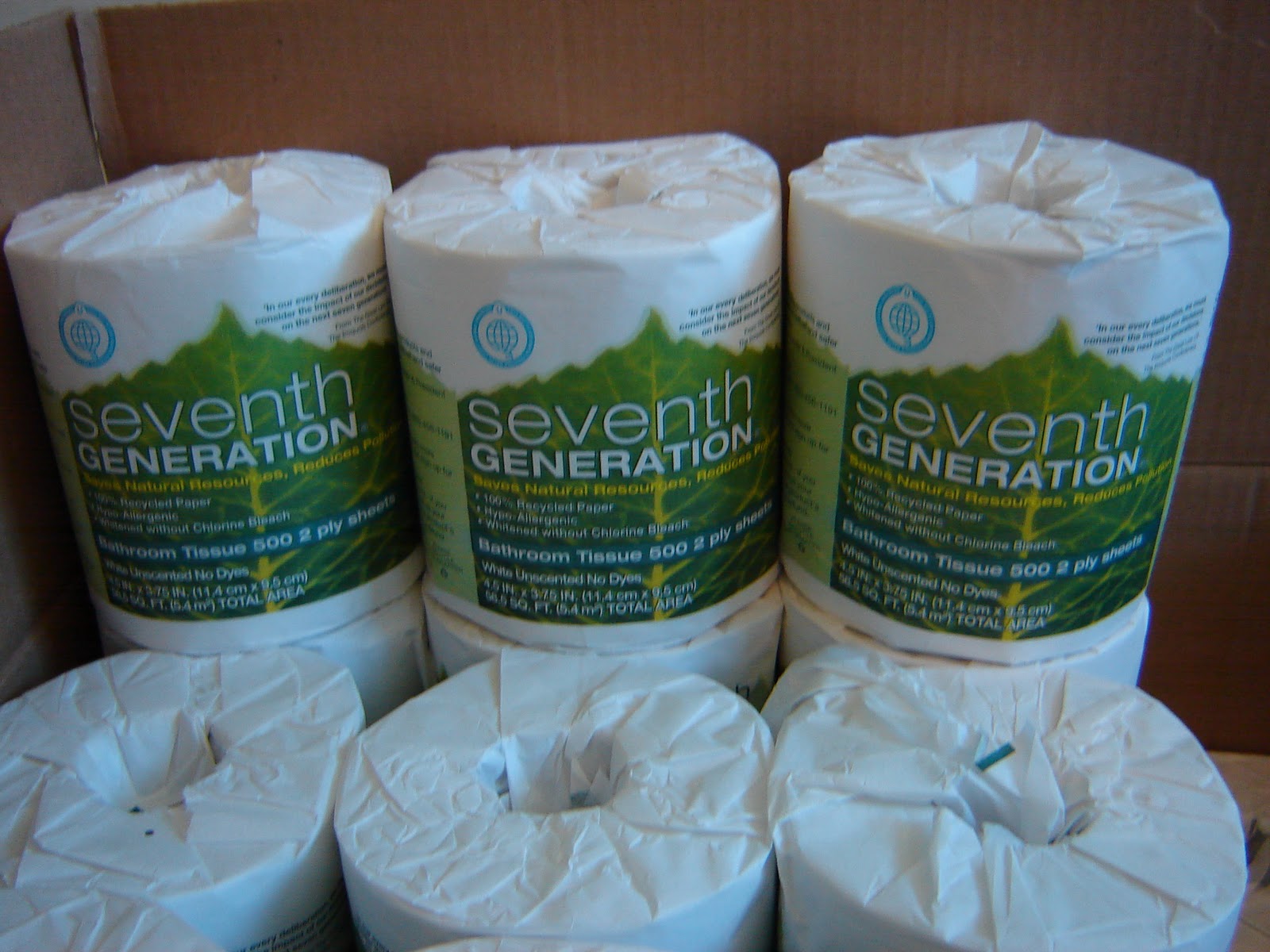
1 & 2. Toilet tissue packages
3. Frozen blueberry bag
4. Kitty litter bag
5. Trash bag (Partially filled with household non-plastic, non-recyclables, non-compostables and the day's kitty litter gleanings)
6 & 7. Intimate product liners
8. Toy package bubble
9. Brown sugar sack
10. Godiva shipping cold pack bag
11 & 12. Cheese packages
13. Tortilla package
14. Toy package bubble
15 & 16. Cat medicine tablet holders
17. Toy package
18 & 19. Cut corners from kitty litter bag & tortilla bag
20. Toothbrush package
Tally analysis
(Answers to the following questions)
What items could I easily replace with plastic-free or less plastic alternatives?
1. The strawberry container and the blueberry sack are easy to eliminate by buying fruits only in season at the farmer's market and carrying them home in our own reusable containers.
2. The individual apple sauce containers are an aberration at our house and unlikely to be in our recyclables again. Typically, we buy applesauce in glass jars, but now that I am semi-retired, I hope to make homemade.
3. The plastic trash bags are being phased out in favor of compostable bags. While they will not break down in the landfill, they will biodegrade quickly should they be released into the environment.
Possibles:
1. Shampoo bottle: One of us still uses commercial shampoo. The other (me) switched to
no-poo awhile back, which means I'm bringing no new shampoo/conditioner bottles into the house. My sweetie is undecided, but strongly considering trying no-poo.
2. Intimate product liner: I am searching for intimate products without plastic liners and have purchased a few organic cotton ones for trial.
3. Medjool date container: We are looking for a bulk source of organic dates where we can fill our own reusable container. These are an important part of our diet, so an alternative absolutely must be found.
4. Toy packaging: We're grandparents. Sometimes we can't resist buying cutesy toys on a whim. Wherever possible, we plan and choose sustainable wooden and handcrafted toys for our grandchildren, but they are usually encased in shrink-wrap or nearly impenetrable plastic bubbles. Plastic seems inevitable in toyland. We can do more to reduce, however, and will continue to work on it.
What items would I be willing to give up if a plastic-free alternative doesn’t exist?
1. Brown sugar sack: While we can buy organic raw sugar in bulk, we have not yet sourced brown sugar in bulk, but we keep looking. I am researching ways to add molasses to recipes in lieu of brown sugar.
2. Tortilla and other wrap packages: Again, because I am semi-retired and have more time, I am looking into recipes for homemade tortillas and other wraps so we can avoid those packages. This would not be possible if I were still working 50-60 hour weeks.
What items are essential and seem to have no plastic-free alternative?
1. Toilet tissue packages: I'm constantly trying to think of ways to minimize and ultimately replace. Write your suppliers and ask them to package in recycled paper!
2. Pill bottles: Alas, necessary, and again, write the suppliers! The more who write requesting glass bottles, the more chance we'll have of achieving change.
3. Medicine bottle for granddaughter: We have to keep a supply of this doctor-prescribed over-the-counter brand on hand for her overnight visits, and no other packaging is available.
4. Godiva ice-pack shipping bag: Not essential, but it came in a gift package, and I am unlikely to dictate to friends and family what they may or may not choose as gifts. I will, however, continue to show my preferences by example, through my writing, which some of them read, and through topical discussion. We keep such items in the freezer and reuse, but I have four of them now, and this one had to go to make room for fresh-frozen foods from the farmer's market. Just realized I could have advertised it on
Freecycle. Duh!
5. Cat medicine tabs: We cannot source any other method for the cat's life-saving medicine.
6. Kitty litter bag: We buy the most ecological we know of, but I must write the manufacture regarding packaging.
7. Toothbrush packaging: So far, I have found no toothbrush packages that do not involve plastic.
8. Frozen berry (and vegetable) packaging: While I will source fresh farmer's market fruits and vegetables wherever possible, it is likely we will continue to use frozen berries and some vegetables in winter months. Eliminating these from our freezer is a long-term goal and will require changing our expectations of what we should have available to eat on a moment's notice. This will take gradual, habit-changing practices.
What lifestyle change(s) might be necessary to reduce my plastic consumption?
I already made one that has made a huge difference: Partial retirement. Had I not semi-retired in the last year, we would have a much larger plastic problem. Like many people, I worked 50-60 hour weeks and all too often opted for quicker, easier solutions. With more time available, I can assure I get to the farmer's market every week, where I can purchase the freshest whole foods and carry them home in my own reusable containers.
I also have time to relearn old skills, such as breadmaking, and to experiment making foods that I previously bought in packages during the years I worked outside the home. These included bread, tortillas, wraps, jams and jellies, frozen fruits and vegetables, sometimes soups and beans.
The biggest lifestyle change would require a move to an apartment or home large enough to accommodate a deep freeze capable of preserving large quantities for up to a year without significant loss of flavor or nutrients. Such a change is unlikely in the foreseeable future.
My dream lifestyle change is to live and work in an ecologically conscious community with communal kitchens and gardens where we could share some, but not all, food growing, gathering, preserving, preparing and eating. I vision and write about such a community in the fictional
Village of Ordinary and here.
Until this or something better is possible in our lives, we will continue on our current path of gradually reducing plastic consumption, one awareness, one problem-solving moment after another.
What one plastic item am I willing to give up or replace this week?
We have purchased compostable trash bags, which we will use for non-compostables/non-recyclables, including kitty litter. We won't start using them this week though, because we still have a stash of the regular plastic bags. I know of no ecological benefit to throwing the unused bags still on our shelf in the trash.
What other conclusions, if any, can I draw?
We need to re-grow our society from the ground up. Ours is a tear-on-the-dotted-line, disposable, throw-away, consumption-addicted culture. We as individuals are the only ones who can change that, by voting with our dollars, asking manufacturers to change, and spreading the word about the need for systemic change until the movement for making conscious, life-enhancing, Earth-preserving choices has reached critical mass.
__
Much gratitude to Beth Terry, who writes
Fake Plastic Fish and issued the challenge. She is doing a grand service to us all by founding and maintaining her blog, keeping the message out there on numerous social networks, and running the challenge.
Much gratitude to you, as well, my few (so far) and faithful readers, whom I treasure, because I am aware that several of you are way ahead of me on this journey to conscious, mindful living. How do you manage the plastics in your life? Are you interested in taking the challenge? Have you already?
__
We make peace in a million small ways every day.
All text and images, unless otherwise noted, copyright L. Kathryn Grace.
All rights reserved.


 at considerable savings, and we don't have to rent a car to get it. Yes, it is shipped to us, but we feel that delivery is offset by the fact we are not driving a car across town to pick it up. Amazon ships 48 rolls in their "frustration free" packaging. That means the box is made to fit the product, is recyclable (NOT recycled, however--We need to work with them on that), easy to open, and contains no